Why Your Study Schedule Fails During Finals (and How to Balance Studying for Exams and Daily Homework)
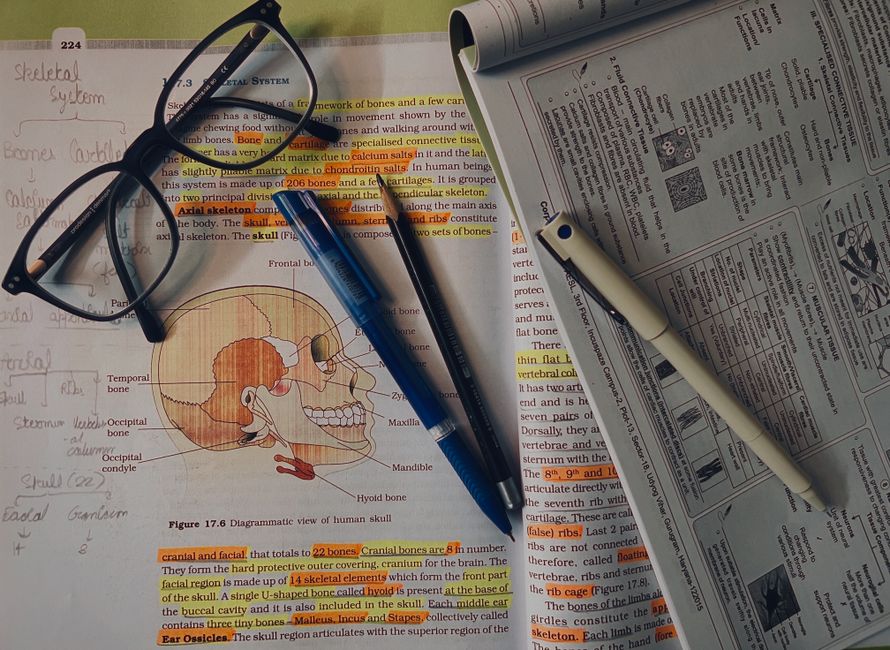
It is four days before chemistry finals, and your desk is covered in three different notebooks, an open textbook, and a notification banner reminding you that a history reading response is due tomorrow morning at eight. You sit down with the best intentions to power through both, but within twenty minutes you find yourself staring blankly at a paragraph about oxidation states, wondering whether you should study the older chapters or finish the homework worksheet that is worth a small percentage of your grade. This is the exact moment when learning how to balance studying for exams and daily homework stops being a theoretical exercise and becomes an immediate survival skill. Most advice tells you to just manage your time better or make a pretty calendar, but that fails the moment a teacher assigns a surprise essay or a cumulative review packet takes twice as long as expected. The real issue is that daily homework and final exam prep require two completely different mental gears, and trying to run them at the same time without a clear operational rulebook leads straight to gridlock. If you want to get through this week without sacrificing your sleep or your grades, you need a realistic triage method that separates immediate compliance tasks from long-term retention goals.
Why Your Current Schedule Collapses Under Pressure
When finals week arrives, your normal daily routine does not just bend; it completely shatters under the weight of extra review requirements. Teachers keep assigning regular homework because their syllabi demand it, while your exam schedule looms large, demanding hours of cumulative practice. The collision of these two forces creates an invisible friction that derails even the most disciplined students. Understanding why this happens is the first step toward building a system that actually survives contact with real school deadlines.
The Homework-Exam Collision Course
The primary reason study schedules fail during high-stress periods is that daily homework and exam prep operate on completely different timelines. Homework is immediate, linear, and mandatory for tomorrow, which makes it feel urgent and impossible to ignore. Exam prep, by contrast, is cumulative, open-ended, and spread across weeks or months. When your time shrinks, the urgent task of finishing tonight's worksheet almost always crowds out the important task of reviewing chapter two for the final. You end up spending three hours completing minor daily assignments just to stay afloat, leaving zero energy or time for the heavy lifting required to master exam concepts. To fix this, you have to stop treating daily homework and exam studying as equal priorities that deserve equal time blocks. Instead, you need to recognize that homework is a maintenance chore, while exam prep is the main event. When you build a realistic school routine, you must deliberately carve out protected zones for cumulative review before you touch a single daily assignment, ensuring that urgent busywork never completely starves your long-term preparation of oxygen.
The Fallacy of the Rigid Hour-by-Hour Calendar
Another major trap is building a minute-by-minute schedule that assumes your brain works with robotic consistency. You write down that from 4:00 PM to 5:00 PM you will review Spanish vocabulary, from 5:00 PM to 6:00 PM you will write a history paragraph, and from 6:00 PM to 7:00 PM you will do math practice problems. The moment a single task runs fifteen minutes over—which it always does—the entire mental structure collapses. You feel behind, panic sets in, and you abandon the schedule altogether, scrolling on your phone for an hour instead. Rigid timetables fail because they lack buffers for friction, fatigue, and unexpected assignment length. A functional system during finals week cannot rely on perfect execution. It must be modular, allowing you to slide blocks of work around based on your actual energy levels and the true weight of the assignments in front of you. Flexibility is not a lack of discipline; it is the core mechanism that keeps a study plan alive when unexpected academic demands pile up.
The Triage Framework: A Five-Step Method for Finals Week
To balance daily homework and exam preparation without burning out, you need a step-by-step triage system that makes decisions for you when you are too tired to think. This framework helps you sort tasks by impact, protect your focus, and execute work in the right order every single afternoon.
Step 1: Audit and Categorize Every Pending Task
Before you open a single book or app, empty your brain and your school portal onto a single sheet of paper. List every single assignment, project, and exam topic currently on your radar. Once listed, categorize each item into one of three strict buckets: Exam Core, Homework Mandatory, and Low-Impact Optional. Exam Core includes cumulative review packets, major essay drafts, and complex problem sets that directly influence your final grade. Homework Mandatory includes small, graded daily tasks like worksheet completions or brief reading checks that keep your baseline grade safe. Low-Impact Optional includes extra credit, non-essential reading, or formatting tweaks that do not change your fundamental understanding. This categorization strips away the illusion that everything on your desk matters equally. It lets you see that you are often spending forty minutes on a low-impact optional worksheet while a major exam core topic sits untouched. Do this audit every afternoon at 3:00 PM so your daily targets are based on reality rather than panic.
Step 2: Apply the 70/30 Time Split Rule
Once your tasks are categorized, divide your available evening study hours using a strict 70/30 split. Dedicate seventy percent of your peak mental energy and time to Exam Core preparation, and reserve the remaining thirty percent for Homework Mandatory tasks. For example, if you have three hours between the end of school and bedtime, roughly two hours should go toward cumulative exam review, practice exams, and active recall sessions. The final fifty minutes should be used to speed-run your daily homework requirements with maximum efficiency. This ratio protects your long-term grade from being cannibalized by short-term busywork. If a daily homework assignment is particularly massive, you are allowed to temporarily drop the ratio to 50/50, but you should never let daily homework consume more than half of your study block during finals week. Keeping the primary focus on exam prep ensures that you are actually studying the material that counts for twenty to thirty percent of your overall class grade.
Step 3: Timebox Daily Homework to Prevent Perfectionism
Daily homework during finals week is a notorious trap for perfectionism. Because you want every grade to be a hundred, you might spend an hour writing a flawless paragraph for a minor daily writing prompt that is graded purely on completion. To stop this leak of time and energy, you must apply aggressive timeboxing to every homework item. Give yourself a strict, non-negotiable time limit—such as twenty minutes for a math problem set or fifteen minutes for a reading response—and set a visible timer. When the timer goes off, you stop writing, evaluate what is on the page, and submit it or pack it away, regardless of whether it is an absolute masterpiece. This practice trains you to separate deep exam studying, which requires thoughtful wrestling with difficult concepts, from administrative homework, which simply requires getting words on a page to satisfy a teacher's checkmark. Protecting your time from homework perfectionism is the secret to having enough mental stamina left for cumulative review.
Quick Tip: Set a loud physical timer on your phone across the room for every homework task so you are forced to get up and stop when time expires, preventing minor assignments from eating into your exam review blocks.
Finals Week Balance Checklist
- Dump all assignments, readings, and exam topics onto a single master list.
- Sort every item into Exam Core, Homework Mandatory, or Low-Impact Optional.
- Allocate at least seventy percent of your study block to cumulative exam prep.
- Set hard time limits on daily homework tasks to prevent perfectionism drift.
- Complete highest-priority exam review topics during your peak energy hours.
- Pack all completed assignments into your bag immediately after finishing them.
- Take a ten-minute screen-free break before transitioning from homework to exams.
With your tasks sorted, your time split secured, and your homework boundaries firmly drawn, the next challenge is structuring the actual work sessions so you do not burn out halfway through the week. In Step 4, we will look at how to sequence your active review methods and handle unexpected homework surges without breaking your schedule.
Step 4: Protect Peak Energy for Cumulative Review
Once your daily homework boundaries are locked in, you must manage your cognitive reserves with absolute precision. Many students make the mistake of tackling daily homework first because it feels easier, leaving their tired minds to deal with complex exam review at nine o'clock at night. By that hour, your ability to process dense formulas, historical timelines, or abstract concepts is completely depleted, leading to slow reading speeds and poor retention. Instead, invert your sequence. Use the first forty-five minutes of your study block—when your focus is sharpest—to tackle your Exam Core priorities. Work through active recall drills, practice exam problems, or essay outlines while your brain has the stamina to wrestle with difficult material. Once that heavy lifting is finished and your core exam material is reviewed, transition to your Homework Mandatory tasks. Even if you feel slightly fatigued during this second phase, routine worksheets and simple reading checks require much less executive function than cumulative exam prep. Aligning your schedule with your natural energy fluctuations ensures that your best cognitive hours are always invested in the material that carries the highest academic weight.
Step 5: Execute Rapid Transitions and Tactical Shutdowns
The final step in the triage framework is managing the physical and mental transitions between tasks so you do not bleed time through hesitation. When you finish your exam review block and need to switch to homework, or when you finish homework and prepare for bed, do not leave your books scattered across the room. Implement a sixty-second tactical shutdown at the end of every work session. Close the notebook you just used, open the next folder, put your pen in its designated spot, and physically stand up for one minute to stretch or drink a glass of water. This brief physical reset signals to your brain that one task is complete and a new one is beginning, cutting down on the ten-minute scrolling habits that often sneak in between subjects. Furthermore, when your evening study block ends, pack your completed homework and review sheets directly into your backpack. Leaving your desk clean prevents morning panic and ensures that you can walk out the door the next day without wasting precious minutes searching for a stray worksheet or a lost formula sheet. Maintaining control over your physical workspace is just as important as managing your time, because a cluttered desk creates mental clutter that slows down every decision you try to make.

Your 15-Minute Reset
If you are currently sitting at a messy desk with a mountain of homework and an upcoming exam, feeling completely overwhelmed about where to start, do not try to plan out the next four days. Stop everything and run this four-step reset right now to regain control in fifteen minutes:
- Minute 1 to 3: Clear your desk of everything except a blank sheet of paper and a single pen. Put your phone in another room or turn it completely off.
- Minute 4 to 8: Write down every single assignment, reading, and exam topic due this week. Mark the top three items that directly impact your final grades.
- Minute 9 to 12: Pick the single most important Exam Core topic and open its textbook or review packet. Close all other tabs and folders.
- Minute 13 to 15: Set a timer for twenty minutes and write down three questions you need to answer about that topic, beginning your first active study session immediately.
Key Takeaway: Treating daily homework as a minor maintenance chore rather than a co-equal priority protects the heavy cognitive hours needed for cumulative exam mastery.
Preventing the Next Backlog Before It Starts
Surviving this week's crunch is only a temporary fix if you fall right back into the same trap during the next testing cycle. To permanently stop academic backlogs from forming, you need structural decision rules that govern how you handle assignments the moment they are handed out by your teachers.
The Same-Day Homework Rule
The most common root cause of finals week panic is accumulating small daily assignments across two or three weeks until they morph into a massive mountain of work. You can eliminate this problem entirely by adopting a strict same-day homework rule. Whenever a teacher assigns a short worksheet, a practice set, or a brief reading response, complete it on the exact same day it is assigned, preferably during a free period at school or during the first twenty minutes of your afternoon study block. Do not let minor tasks linger on your desk overnight. By clearing small assignments immediately, you ensure that your evening study hours remain entirely free for long-term projects and cumulative exam review. This habit completely removes the mental burden of carrying overdue tasks, allowing you to approach exam weeks with a clean slate and a calm mind. If you want to refine this approach further, you can read more about time management for students to build sustainable daily routines.
Pre-Scheduled Cumulative Review Blocks
Waiting until two weeks before finals to look over your semester notes is a guaranteed recipe for late-night cramming. To prevent this, stop treating exam preparation as a seasonal event and start treating it as a weekly habit. Block out thirty minutes every Wednesday and Sunday throughout the entire grading period specifically for cumulative review. During these sessions, you do not do new homework; you simply re-read past chapter summaries, reorganize old problem sets, and test yourself on key concepts from previous units. Because the review is distributed across weeks, the information sticks in your long-term memory with minimal effort. When finals week finally arrives, you will not need to spend twenty hours relearnig forgotten material from scratch. You will only need light polishing, which frees up your evenings for relaxation, adequate sleep, and maintaining your regular daily homework schedule without stress.

Frequently Asked Questions
What should I do if a daily homework assignment takes two hours and ruins my study split?
If a single homework task unexpectedly consumes hours of your evening, stop and evaluate its grading weight. If it is a minor completion grade, set a timer for twenty more minutes, do as much as you can, and submit whatever is finished to protect your exam prep time. If it is a major project that genuinely impacts your grade, temporarily shift your ratio to 50/50 for that specific evening, but immediately resume your 70/30 exam priority split the following day.
Is it better to study for one exam all evening or switch between two different subjects?
Switching between two subjects in a single evening—such as spending one hour on chemistry and forty-five minutes on history—is generally more effective than block-studying a single topic for three hours. Interleaving different subjects prevents mental fatigue and keeps your brain actively engaged in retrieving varied problem-solving strategies, which mirrors the format of a multi-subject exam week.
How do I handle the anxiety of falling behind when my to-do list is still long?
Anxiety during finals week usually stems from looking at the entire week's workload all at once. To quiet that panic, shrink your field of vision to the next sixty minutes. Pick one high-impact task from your Exam Core bucket, set a timer, and ignore every other item on your master list until that single task is crossed off. If test pressure begins to feel overwhelming, you can also explore strategies to handle exam-day anxiety so stress does not cloud your thinking.
Should I skip sleep to finish both my daily homework and my exam review?
Never sacrifice sleep to finish routine homework or cram for an exam. Sleep deprivation impairs your memory consolidation, lowers your problem-solving speed, and guarantees that you will make careless errors on test day. Stopping your work at a reasonable hour, getting a full night of rest, and entering the exam with a rested mind will almost always yield a higher grade than staying up until three in the morning.
This article offers general educational information, not medical advice. If distress is persistent or you feel unsafe, speak with a trusted adult, a school counselor or a qualified health professional.
Conclusion
Balancing daily homework and exam preparation does not require superhuman discipline or an impossibly rigid timetable; it requires a clear-cut system that separates urgent maintenance from long-term mastery. By auditing your tasks daily, enforcing a 70/30 time split, timeboxing minor homework, and protecting your peak energy hours, you can conquer finals week without sacrificing your well-being. Take one simple action today by writing down your master task list and categorizing your assignments before you open your books tonight. If you found this triage method helpful, consider sharing this guide with a classmate or friend who is currently buried under a stack of finals week homework. Questions or feedback? Email us at organizeddailylife@gmail.com.
Comments