The Open-Book Exam Prep Checklist: How to Study for Open Book Exams in College Without Searching for Hours
You sit down at your desk with your laptop, textbook, three loose notebooks, and forty printed PDF pages. The clock in the top corner of your screen starts ticking down a ninety-minute timer. You flip open the exam prompt, read the first major application question, and realize immediately that you have no idea which chapter covers this exact concept. You start typing keywords into a PDF search bar, watching the little yellow highlight jump across thirty different pages of dense lecture slides. Minutes slip past. Your chest feels tight, your palms are warm, and you are frantically scanning paragraphs about topics you remember seeing somewhere, but can no longer locate. If you feel overwhelmed by the clock, taking a step back to build a realistic school routine before your next assessment can change how you manage your study hours. Many students assume that having access to every note, textbook, and online resource makes an exam easier. In reality, an open-book format often shifts the challenge from memorizing facts to navigating information under pressure. If you do not prepare your reference materials ahead of time, your exam turns into an exhausting scavenger hunt where searching wastes the time you need to write clear, thoughtful answers.
Why Open-Book Exams Trap Smart Students
The Illusion of Easy Access and Passive Storing
The core trap of open-book testing is a false sense of security. When you know you can look up any definition or formula during the test, your brain naturally resists the effort required to build strong mental connections. You tell yourself that organizing notes is unnecessary because the answers are already sitting right there in your folders. Consequently, your digital desktop fills with unorganized downloads, random screenshots, and lecture transcripts labeled "Lecture_final_v2_edit." When the test begins, this massive pile of uncurated information becomes a liability rather than an asset. You waste valuable mental energy trying to remember whether a specific concept was in the textbook chapter, the professor's supplementary handout, or your own handwritten seminar notes. True preparation for this style of assessment requires treating your materials less like a storage attic and more like a carefully mapped reference library.

The Real Cost of Searching During a Timed Test
During a typical college exam, every minute spent hunting for a page or a formula is a minute stolen from drafting and refining your answers. Consider the math of a standard sixty-minute test with four multi-part essay questions. If you spend eight minutes per question simply looking up basic definitions or trying to locate a specific case study, you lose over half your available time to navigation alone. This leaves you rushing through the actual analysis, leading to incomplete explanations and careless errors. To prevent this, your pre-exam routine must focus on reducing search friction to zero. You need to know not just what your materials say, but precisely where every core concept lives so your eyes can land on it in less than five seconds.
The Five-Step Open-Book Exam Preparation System
Step 1: Audit and Consolidate Your Source Materials
The first step in learning how to study for open book exams in college is to gather every single piece of permitted material into one centralized location. Clear your physical desk of unrelated papers and establish a single digital folder on your computer for the exam. Delete duplicate files, rename vague downloads with clear, descriptive titles such as "Week_4_Cost_Benefit_Analysis.pdf," and print any essential cheat sheets permitted by your instructor. Do not leave yourself juggling three different cloud drives and a messy desktop folder on test day. If your professor allows physical books, sticky-note the major chapter openings so you can thumb directly to them without reading the table of contents.
Step 2: Build a Master Index Instead of a Summary
Writing out long summaries of every lecture is a waste of time when the textbook is already in front of you. Instead, create a master index document—a two-to-three-page reference sheet that lists key terms, core theories, formulas, and case studies alongside their exact page numbers or file names. Think of this index as the card catalog for your exam materials. If Question 3 asks about price elasticity, your index should instantly point you to "Price Elasticity: Textbook p. 114, Lecture Slides W3, Slide 18." Building this index forces you to review your materials actively while creating a lightning-fast navigation tool for the actual exam.
Step 3: Annotate with Purpose and Color-Coding
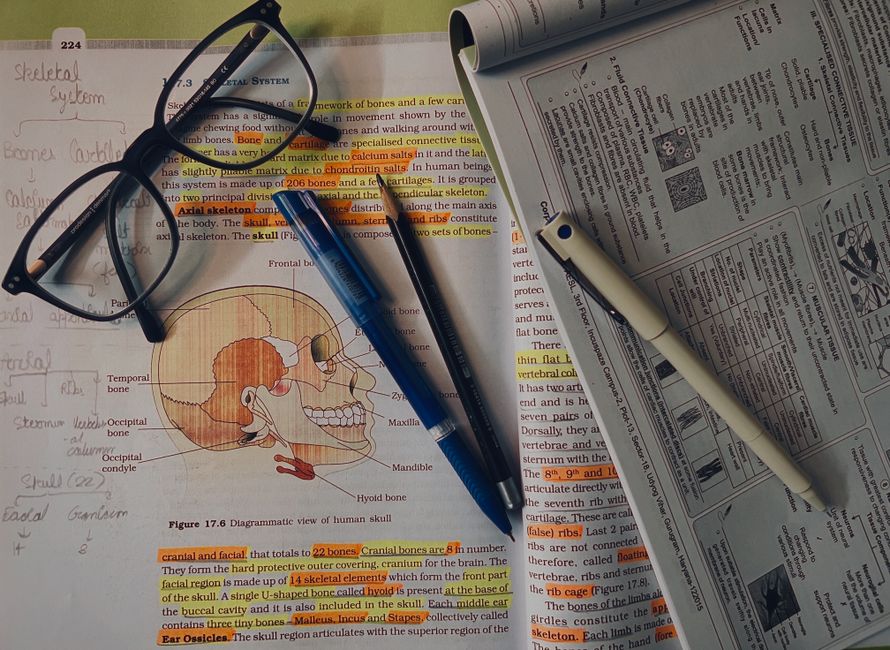
When you review your notes and readings, use a strict, consistent color-coding system to categorize information by type rather than aesthetic appeal. For example, assign one color exclusively to definitions, another to core formulas or statutory rules, and a third to specific examples or counterarguments. When you look at a page during a high-stakes test, a colored highlight should immediately tell you whether a paragraph contains a definition you can quote or an example you need to analyze. Avoid highlighting entire paragraphs; instead, mark only the anchor words that summarize the core argument of that section.
Quick Tip: Limit your highlighted text to no more than ten percent of any single page. If everything on the page is highlighted, nothing stands out when you glance down during a timed test.
Your Pre-Exam Material Readiness Checklist
- Consolidate all permitted digital files into a single, clearly named folder on your desktop.
- Create a concise two-page master index linking key concepts to their exact page numbers.
- Check and verify that all allowed physical books and printed sheets comply with course rules.
- Apply a consistent color-coding system for definitions, formulas, and case examples.
- Test your index by looking up three random practice questions to see how fast you find the answers.
- Export or back up your digital files to a secure cloud location as a safety measure.
Once your master index is compiled and your reference files are cleanly annotated, your next priority is testing your navigation speed under simulated exam conditions before test day arrives...
Step 4: Practice Open-Book Retrieval Under Time Constraints
Studying for an open-book exam requires practicing with your reference materials in front of you. Many students review their notes closed-book and only open them during the actual test, which leads to confusion about where specific details reside. Take a past quiz or a sample essay prompt, set a timer for twenty minutes, and force yourself to find the relevant information using only your master index and annotated files. Pay close attention to how long it takes to transition from reading a question to locating the source paragraph. If you find yourself flipping back and forth between three different PDFs without success, refine your index immediately by adding clearer keywords or direct cross-references. Treating practice sessions as dress rehearsals for your document navigation will build the physical and mental habits needed to stay calm when the clock counts down.
Step 5: Draft Reusable Analytical Frameworks and Templates
Open-book questions rarely ask for simple memorized definitions; instead, they require you to apply theories, compare case studies, or evaluate arguments. You can save immense amounts of writing time by preparing blank analytical templates before the exam. For example, if you know an economics test will require analyzing market interventions, create a standard structural template in your reference documents: a blank checklist covering assumptions, graphical shifts, short-run effects, and long-run consequences. When the exam question appears, you simply drop your specific data into the pre-formatted framework rather than staring at a blank page trying to figure out how to structure your response. This structured approach lets you study without staring at your notes for extra hours while producing cleaner, more rigorous answers.
Key Takeaway: An open-book exam tests your ability to curate, navigate, and apply information under pressure, not your capacity to hold raw data in your head.
Your 15-Minute Reset
If you feel disorganized and your exam is only hours away, stop reading new material immediately and execute this quick four-step reset to regain control of your reference materials:
- Clear the clutter: Close every browser tab, document, and chat window unrelated to the exam subject, leaving only permitted resources open.
- Build a fast list: Open a blank document and type out twenty essential terms, formulas, or cases with their exact page numbers or file names.
- Test one prompt: Pick one past exam question, find the supporting page numbers in under ten seconds, and write a two-sentence outline.
- Set your layout: Arrange your physical desk or digital split-screen so your master index and primary textbook sit directly in front of your keyboard.

Preventing the Same Backlog Next Week
Once this test is finished, the temptation is to close your course folder and forget it ever existed until the final exam arrives. To prevent repeating the frantic scramble next time, implement two straightforward procedural rules starting in week one of your next unit.
Maintain Your Master Index Week by Week
Instead of letting unorganized lecture slides and reading notes pile up across the semester, update your master index every Friday afternoon. Dedicate fifteen minutes at the end of each week to add new terms, statutory rules, or core formulas to your master document while the lectures are still fresh in your mind. By the time exam season arrives, your navigation index is already ninety percent complete. This eliminates the massive weekend panic of trying to summarize eight weeks of missed reading in a single evening.
Enforce a Strict Digital Naming Convention
Digital clutter accumulates because files download with meaningless strings of numbers and letters. Adopt a strict three-part naming rule for every document you save throughout the term: [WeekNumber]_[TopicName]_[SourceType]. For example, "W04_MonetaryPolicy_LectureNotes.pdf" or "W06_TortsCaseLaw_Textbook.pdf." When you search for files during a timed test, sorting by name groups your documents in chronological and thematic order instantly, ensuring you never waste precious seconds wondering what a file contains.
Frequently Asked Questions
Are printed notes better than digital files during an open-book exam?
Both formats have distinct advantages, but printed notes eliminate the risk of accidental tab closures, dead batteries, or software crashes. If you use digital files, make sure your operating system is updated, your desktop is clean, and your files are saved locally so you do not rely on a slow university Wi-Fi network to load reference pages.
How many pages should my master index be?
A high-quality master index should be concise, ideally between two and four pages. If your index grows longer than five pages, you are including too much descriptive text instead of focusing on pure navigation signposts, keywords, and page numbers.
What should I do if my professor’s rules on permitted materials are vague?
Never guess course policies. Send a direct, polite email to your instructor or teaching assistant at least forty-eight hours before the test asking specifically whether printed articles, handwritten cheat sheets, or digital textbooks are allowed. Keep their written confirmation accessible during the exam just in case.
How should I split my time between searching and writing?
As a general guideline, spend no more than ten to fifteen percent of the time allocated for a specific question on looking up references. If you cannot locate a specific piece of data within two minutes, move forward with your existing analysis rather than sacrificing the remainder of your writing time.
This article offers general educational information, not medical advice. If distress is persistent or you feel unsafe, speak with a trusted adult, a school counselor or a qualified health professional.
Conclusion
Mastering open-book assessments is less about cramming facts and more about organizing your resources so you can think clearly under pressure. Pick one concrete step from this guide today—such as building a two-page master index or consolidating your digital desktop folder—and set up your workspace before your next test date arrives. If you know a classmate who is currently buried under a mountain of chaotic study PDFs, consider sharing this checklist with them to help turn their next exam preparation around.
Questions or feedback? Email us at organizeddailylife@gmail.com.
Comments